
Cast Steel
Grade is selected for strength, toughness, weldability and service load.
Custom cast-steel ball mill heads and end covers engineered for stable support, accurate fit and controlled stress.
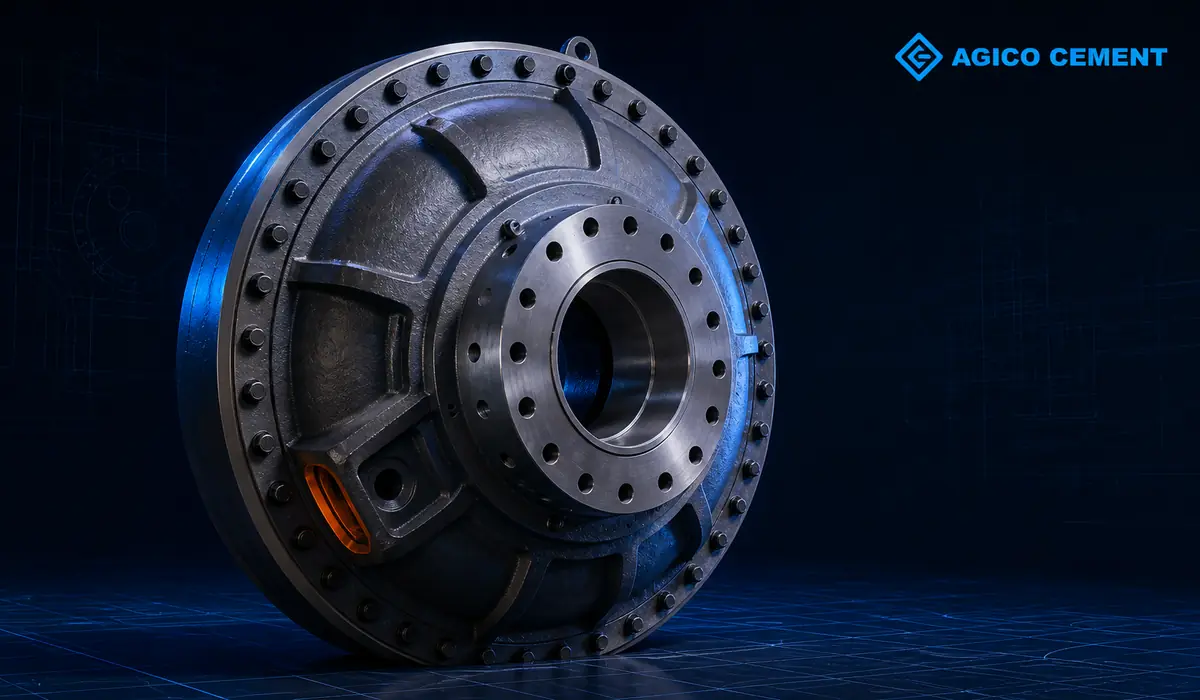
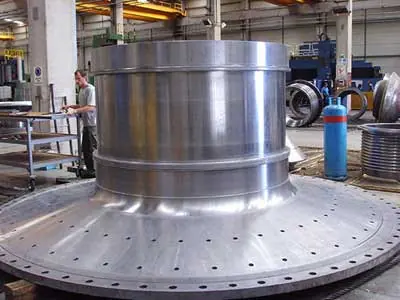
The ball mill head, also called a ball mill end cap or ball mill end cover, closes both ends of the mill barrel and transfers the weight of the cylinder, material and grinding media into the bearing system. Its complex casting, long production cycle and high assembly accuracy require a controlled process route.
AGICO retains the original focus on wear, leakage and weld-stress control. Fillet geometry, hollow-shaft interfaces, inlet or discharge pipe fit and post-weld heat treatment are reviewed against the buyer drawing.
Values shown below preserve the original product information while identifying what must be confirmed for the actual order.
| Product | Ball mill head / ball mill end cap / ball mill end cover |
|---|---|
| Function | Support barrel, charge and grinding media at the mill ends |
| Critical areas | Hollow-shaft root fillet, bearing journal and pipe interface |
| Manufacturing basis | Approved drawing, casting process and machining datums |
| Heat treatment | Selected to control casting and welding residual stress |
Grade is selected for strength, toughness, weldability and service load.
Matching gap and welding procedure are confirmed for inlet or discharge components.
Heat treatment supports dimensional stability and fatigue resistance.
Supports the feed trunnion and seals the material entry interface.
Supports discharge components while controlling slurry or powder leakage.
Drawing-based supply for worn, cracked or poorly fitting end covers.
Mill model, head position and complete drawing
Barrel, trunnion and pipe interface dimensions
Material grade, heat treatment and inspection standard
Observed wear, crack or leakage location
Material certificate and traceability review
Process inspection against the approved drawing
Critical dimensions and mating-interface verification
NDT, hardness or balance checks when specified
Identification, surface protection and export packing
The Ball Mill Head transmits or supports operating load through rotating and stationary interfaces. Its performance cannot be judged by outside dimensions alone. Load path, mating parts, operating environment and the condition of the surrounding equipment all affect whether a replacement will fit correctly and run reliably. AGICO therefore reviews the component as part of the machine rather than treating it as an isolated catalogue item.
For a replacement project, the most useful starting point is the current drawing together with the equipment model and site observations. Wear photographs, failure location, maintenance history and measurements taken during shutdown help distinguish normal consumption from an interface, alignment or operating problem. This review allows the quotation to state the proposed supply boundary and the information that still requires confirmation.
Confirming the following groups of data reduces dimensional risk and avoids selecting the Ball Mill Head from a name or model reference alone.
Provide the available values, drawing references and photographs for applied radial, axial and transient loads. AGICO will compare them with the proposed Ball Mill Head configuration and identify any missing inputs before the manufacturing basis is released.
Where site data differs from an old drawing, mark the measured value and the measurement position. The final requirement should be agreed against the approved drawing rather than assumed from a nominal equipment designation.
Provide the available values, drawing references and photographs for mating diameters, fits, datums and bolt pattern. AGICO will compare them with the proposed Ball Mill Head configuration and identify any missing inputs before the manufacturing basis is released.
The production route for the Ball Mill Head is established after drawing review. It typically coordinates casting or forging route, heat treatment and rough machining. Process hold points depend on material, geometry and the buyer's inspection requirements. Critical datums and machining references are identified early so that later operations protect the interfaces used during installation.
Inspection is planned around product risk rather than added only at final dispatch. Material traceability and heat-treatment records; Critical journals, bores, faces and runout; Specified NDT at highly stressed transitions; Balance, contact pattern or assembly checks when applicable. When a test or report is required, it should be listed in the enquiry so that sampling, acceptance criteria and document format can be agreed before manufacture. Final release checks also confirm marking, quantity, surface protection and the packing list.
Maintenance teams should evaluate the Ball Mill Head together with its mating parts and operating records. Typical reasons for closer inspection include:
Unusual vibration, noise or temperature near the component. Record the location, extent and operating condition, then compare the finding with the equipment maker's limits and the site's maintenance procedure before deciding whether repair or replacement is appropriate.
Cracks, scoring, fretting or uneven contact marks. Record the location, extent and operating condition, then compare the finding with the equipment maker's limits and the site's maintenance procedure before deciding whether repair or replacement is appropriate.
Loss of alignment, excessive runout or repeated seal failure. Record the location, extent and operating condition, then compare the finding with the equipment maker's limits and the site's maintenance procedure before deciding whether repair or replacement is appropriate.
Dimension drift that prevents a controlled fit during shutdown. Record the location, extent and operating condition, then compare the finding with the equipment maker's limits and the site's maintenance procedure before deciding whether repair or replacement is appropriate.
AGICO can prepare a drawing-based Ball Mill Head for new supply or replacement service. The technical review covers the requested material, configuration, interfaces, inspection scope and documentation. If the original drawing is incomplete, provide measurements, nameplate information and clear photographs; the missing points will be listed for confirmation. No order-dependent dimension or performance value is treated as final until it appears in the approved technical documents.
Packing is planned for component weight, geometry, transport mode and destination. Finished surfaces can be protected against handling damage and corrosion, while loose accessories and documents are identified against the packing list. For international delivery, buyers should state the destination, preferred trade terms, lifting or site-access restrictions and required arrival schedule so that the quotation can separate manufacturing scope from freight and local handling.
Complete technical inputs reduce clarification cycles and help us quote the correct supply scope.
Send Your RequirementReview drawing and operating data
Confirm material, process and inspection plan
Manufacture and machine the component
Complete agreed inspection and records
Protect, pack and ship for installation
Yes. Send the drawing, equipment model and operating data for engineering review before quotation.
The agreed scope can include material certificates, dimensional reports and product-specific NDT, hardness or balance records.
Provide the ball mill head drawing or dimensions, material, quantity, operating conditions, destination and required delivery date.
Yes. Packing and shipment can be planned for the component size, finished-surface protection and destination requirements.
Send your drawing, operating data and delivery destination for a technical review and quotation.
Request a Ball Mill Head QuoteRoom 908, unit 1, building 2, Huaqiang Xintiandi, Xiange Avenue, Anyang, Henan Province, China +86 18603725242